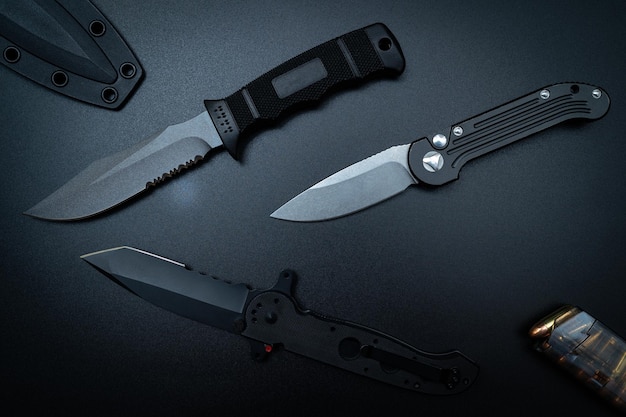
In a survival situation, your knife is more than just a tool—it’s an extension of your hand. It’s the one piece of gear you’ll rely on for a thousand tasks, from starting a fire and building a shelter to preparing food and treating an injury. But with a dizzying array of options, how do you choose the one that won’t fail you when your life depends on it?
Choosing the right survival knife isn’t about finding the biggest or most expensive blade. It’s about understanding the core features that ensure strength, versatility, and reliability.
1. Fixed Blade or Folding? Go Fixed.
This is the most critical decision you’ll make.
- Folding Knives: While great for everyday carry (EDC) because of their portability and safety, they have a major weakness: the locking mechanism. A folding knife has a pivot point and moving parts that can break, get clogged with dirt, or fail under heavy pressure.
- Fixed Blades: A fixed blade knife is a single, solid piece of steel that extends from the tip of the blade to the end of the handle. This means there are no moving parts to break. Its superior strength and durability make it the undisputed choice for survival scenarios where you might need to chop, pry, or baton wood.
2. The Tang: Full Tang is Non-Negotiable
The tang is the part of the blade that extends into the handle. For a survival knife, you must choose a full tang design.
- Full Tang: The metal of the blade runs the entire length and width of the handle. This provides maximum strength, balance, and durability. Even if the handle scales (the material on the handle) were to break off, you could still use the knife by wrapping the tang with paracord or cloth.
- Partial Tang: The metal stops short inside the handle, which creates a weak point. Under heavy stress (like batoning wood), the blade can snap off from the handle, rendering it useless and potentially dangerous.
3. Blade Steel: Stainless vs. High Carbon
The type of steel determines a knife’s performance characteristics. Both have pros and cons.
- High-Carbon Steel: This is the most popular choice for serious survival knives. It is known for its toughness (resistance to chipping and breaking), ease of sharpening, and excellent edge retention. The trade-off is that it’s more prone to rust and requires regular maintenance (cleaning and oiling).
- Stainless Steel: It has high corrosion resistance due to a high chromium content, making it great for wet or marine environments. However, it is generally softer and more difficult to sharpen in the field.
Bro Tip: For a true survival knife, most experts will recommend a high-carbon steel for its toughness and the ability to get a razor-sharp edge easily. A good middle ground is a tool steel like D2, which offers a great balance of toughness and corrosion resistance.
4. Blade Shape and Size
A survival knife should be a versatile workhorse, not a specialized tool.
- Blade Length: A blade length between 4 and 6 inches is a sweet spot. It’s long enough for chopping and batoning but short enough for fine, detailed tasks like carving and making fire-starting feather sticks. Anything longer can be cumbersome, and anything shorter limits your capabilities.
- Blade Shape: A drop-point or clip-point blade is highly versatile. They have a strong tip for piercing and a curved belly for slicing and carving. Avoid overly complex shapes, double-edged blades, or large serrations on the main cutting edge, as they are harder to maintain and limit versatility.
- Spine: A squared-off, 90-degree spine is a fantastic feature. It can be used to scrape a ferro rod for fire starting and for scraping wood to create tinder.
5. The Handle: Grip and Durability
A knife is only as good as its grip. A good handle should provide a secure and comfortable hold in all conditions, wet or dry.
- Synthetics: Materials like G-10 and Micarta are top choices for survival knives. They are incredibly durable, lightweight, resistant to moisture and temperature changes, and offer an excellent, grippy texture.
- Natural Materials: While beautiful, materials like wood, bone, and leather can become slippery when wet, and may shrink, crack, or expand over time.
The Bottom Line:
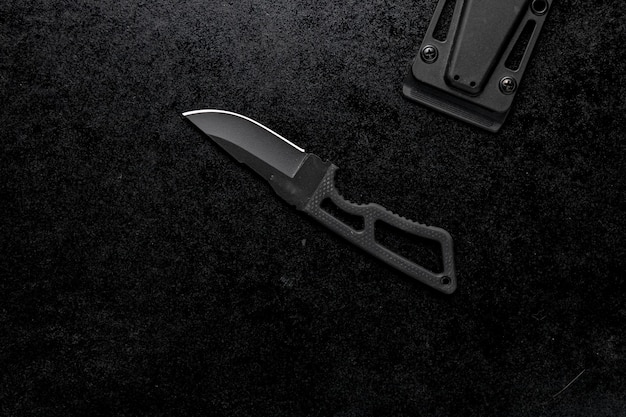
The best survival knife is the one you know how to use and trust with your life. Prioritize a fixed blade with a full tang, and choose a high-carbon steel blade in a 4-6 inch range with a versatile shape. The right knife isn’t about bells and whistles; it’s about a rugged, reliable tool that is ready for anything.