When it comes to personal protection, armor isn’t a single-item fix — it’s a system. Layering soft armor and hard plates correctly gives you multi-threat protection, reduces blunt trauma, and lets you tailor protection to the mission. But every layer adds weight, heat, and trade-offs in mobility. This guide breaks down how to match soft and hard armor for real-world use so you stay alive and able to move.
Why Layering Matters
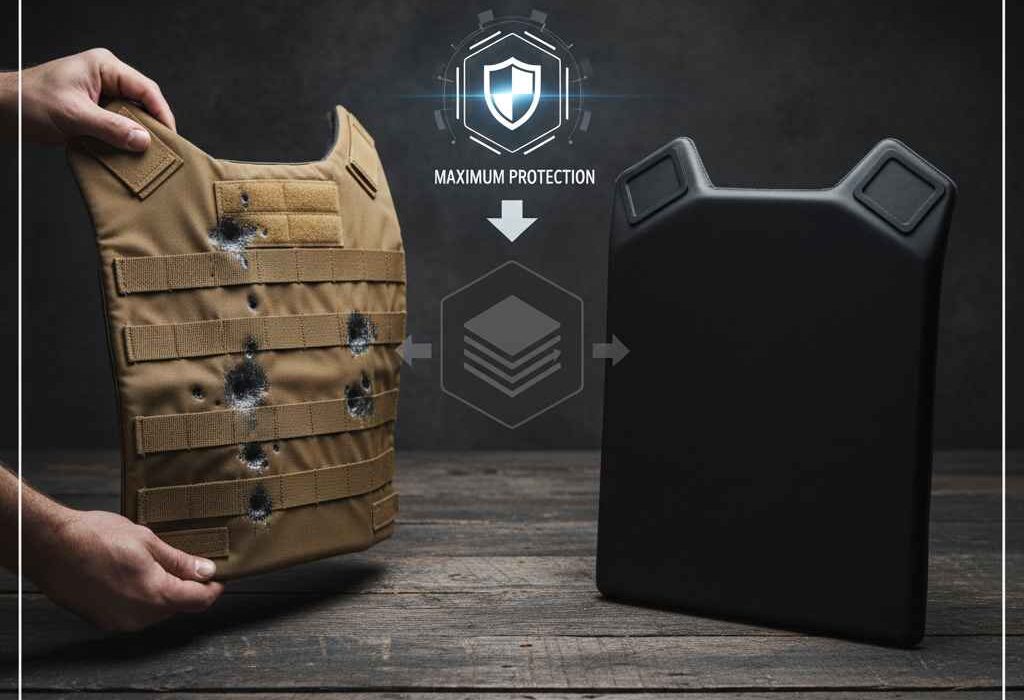
A single plate or vest can’t solve every threat. Layering lets you:
- Provide multi-threat coverage (handguns, fragmentation, rifle rounds depending on materials).
- Reduce backface trauma with padding or trauma plates.
- Customize protection for mission needs — from covert daily wear to full-force assaults.
Think of armor like a toolbox: you pick the combination that solves the problem without carrying every tool all the time.
What Each Layer Does
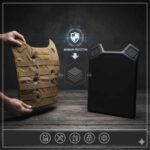
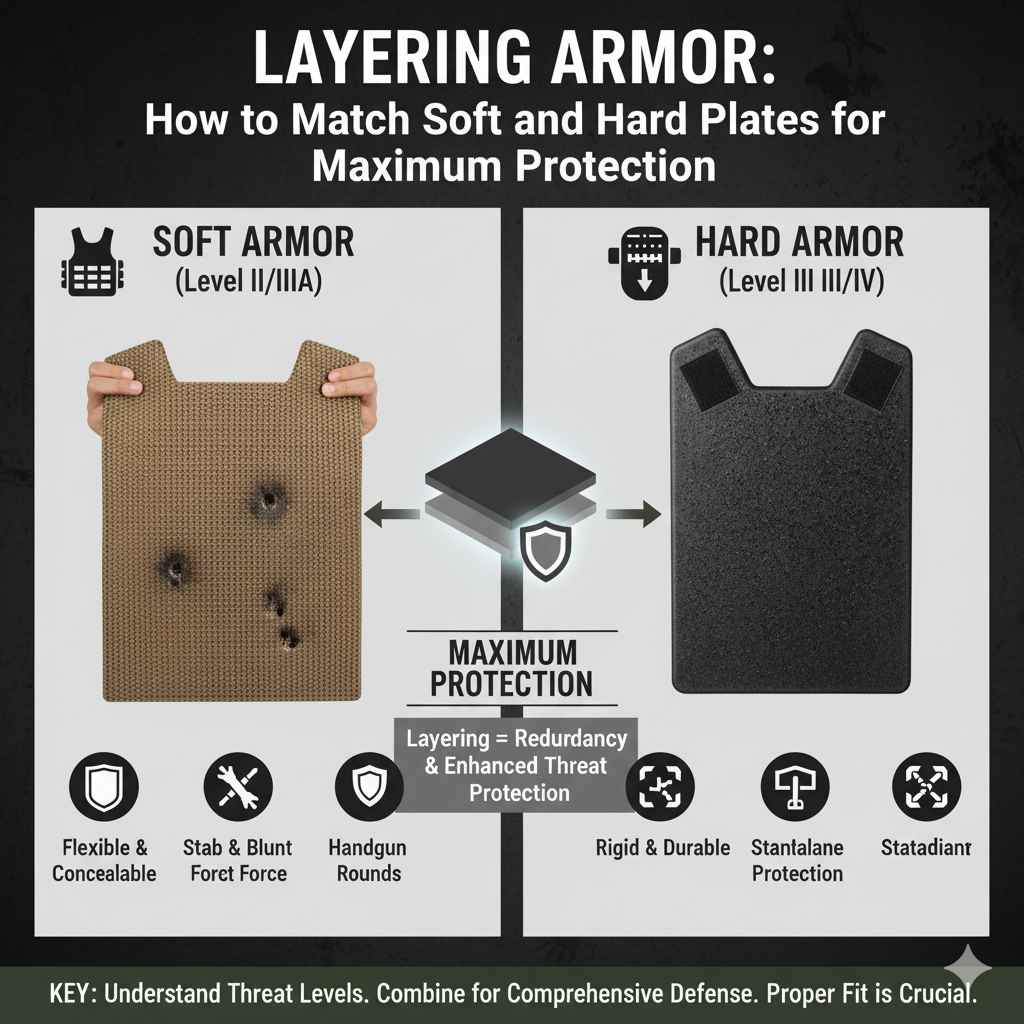
Soft Armor (NIJ Level IIA–IIIA)
- Made from Kevlar or advanced fibers.
- Protects mainly against handguns and fragmentation.
- Lightweight, flexible, concealable under clothing.
- Typical use: everyday covert protection, patrol liners.
Hard Plates (NIJ Level III / IV)
- Constructed from steel, ceramic composite, or UHMWPE (polyethylene).
- Level III handles most rifle FMJ rounds (e.g., 7.62 NATO).
- Level IV rated for some armor-piercing rounds; heavier and costlier.
- Typical use: frontal/side protection on plate carriers for high-risk ops.
Trauma Pads & Backing
- Reduce blunt-force injury (backface deformation) when a round is stopped.
- Essential behind plates—especially ceramic and polyethylene.
Trade-Offs You Need to Know
- Protection vs Mobility: More plates = more weight and less agility.
- Coverage vs Heat: Wider coverage increases heat stress and fatigue.
- Cost vs Performance: Ceramic/PE are lighter but pricier; steel is cheaper and durable but heavy and spalls.
- Concealability: Soft armor hides under clothes; plates mean a visible carrier.
Decide which of these you accept for each mission.
Match Layers to Mission Profiles
Covert / Low-Profile (Everyday Carry)
- Goal: blend in, stay mobile.
- Kit: Soft armor IIIA in a concealable carrier; trauma pad optional.
- When: daily urban carry, protective details without known rifle threat.
Patrol / Security (Balanced)
- Goal: sustain long ops with reasonable protection.
- Kit: Soft armor IIIA + optional front/back Level III (lightweight ceramic/PE). Side SAPI plates if risk high.
- When: routine patrols, checkpoints where rifle threat is possible.
Assault / Entry (High-Risk)
- Goal: survive rifle and shrapnel in close contact.
- Kit: Full setup — front/back Level III/IV plates, side plates, trauma pads, ballistic helmet.
- When: raids, high-risk entry, frontline exposure.
Evasion / Bugout (Mobility-First)
- Goal: move fast and far; avoid heavy contention.
- Kit: Minimal soft armor or carry plates in pack to don only if needed.
- When: long-distance movement, escape scenarios.
Fit, Positioning & Ergonomics — Do These Right
- Plate height: top edge should sit at/just below the collarbone (sternal notch).
- Centering: plates must cover the heart and major arteries; adjust straps so plates don’t shift when moving.
- Snug carrier: tight enough to stay centered but not so tight that it restricts breathing or movement.
- Mobility checks: run, kneel, aim, and transition while wearing full kit — if something binds, adjust.
Keep heavy items close to your spine to reduce torque and muscle strain.
Material Quick Guide
- Ceramic / Composite: good ballistic performance, lighter than steel, can crack after hits (backing matters).
- PE (UHMWPE): very light, floats, good for mobility; sensitive to heat/UV over long storage.
- Steel: affordable, multi-hit resilient, heavier, risk of spall (use anti-spall covers).
- Hybrid Plates: mix materials to balance cost, weight, and multi-hit capability.
Extras: Side, Groin, & Head Protection
- Side plates (SAPI or similar): protect ribs — important for static security or vehicle ops.
- Groin / collar protectors: useful when holding position; avoid for high-mobility tasks unless mission-critical.
- Helmets: match helmet protection level to plates (ballistic helmets for shrapnel/ballistics; bump helmets for non-ballistic impacts).
Medical & Heat Considerations
- Plates stop penetration but not blunt force. Always use trauma pads and train in TCCC—tourniquets, chest seals, hemorrhage control.
- Heavy armor increases heat stress—plan hydration, cooling, and rotation strategies.
Maintenance & Inspection
- Inspect armor monthly and after any impact. Look for: ceramic cracks, dents in steel, fraying or delamination in soft armor.
- Replace soft armor per manufacturer timelines (often 5–10 years depending on exposure and use).
- Clean carriers per instructions; store plates flat and soft armor dry and ventilated.
Legal & Safety Notes
- Laws on owning/wearing armor vary—check local regulations before buying or using ballistic gear.
- Armor increases survivability but isn’t invulnerability—combine it with tactics, training, and medical readiness.
Essential Training Drills
- Don/doff under stress: be able to equip and remove armor quickly.
- Movement drills with full kit: run, climb, change positions while carrying plates.
- Medical drills: apply tourniquet and control hemorrhage while wearing armor.
- Failure drills: practice responding to strap failure, shifted plate, or damaged kit.
Train with the kit you intend to use — real weight changes everything.
Quick Pre-Mission Checklist
- Define mission profile (Recon / Patrol / Assault / Bugout)
- Select soft armor level (IIIA for conceal; higher only if needed)
- Choose plate level & material (III vs IV, PE vs ceramic vs steel)
- Add trauma pads & helmet matched to plates
- Fit & adjust carrier; perform mobility test
- Pack hydration, IFAK, comms, and redundancy for critical items
- Inspect & test kit: plates, straps, zippers, batteries, med supplies
Final Thoughts
Layered armor is about informed trade-offs. Pick protection proportional to the threat, train relentlessly in that kit, keep it maintained, and don’t overburden yourself with unnecessary weight. When soft armor and plates are matched correctly to mission needs, you get the sweet spot — enough protection to survive the hit and enough mobility to finish the mission.