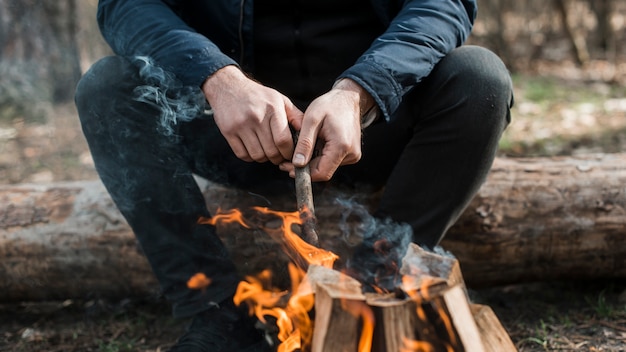
When it comes to survival, fire is life. It keeps you warm, cooks your food, purifies water, and even signals for help. But thanks to movies, TV shows, and internet rumors, there are plenty of fire-making myths that can actually put your life at risk.
Let’s break down the common myths vs. real facts about fire-making — so when the time comes, you’ll know exactly what works.
❌ Myth 1: Rubbing two sticks together is enough to make fire
Reality: While technically possible, starting a fire this way requires perfect wood, dry conditions, and hours of effort. In most emergencies, your energy is better spent finding tinder and using a lighter, matches, or a ferro rod. Primitive friction fires are a last resort, not a reliable method.
❌ Myth 2: You can light a fire with just a magnifying glass anytime
Reality: This only works in direct, strong sunlight — cloudy skies, rain, or nightfall make it useless. Plus, it takes time and very dry tinder. In a survival situation, it’s unreliable as your main fire-making method.
❌ Myth 3: Wet wood can’t burn
Reality: Wet wood is harder to ignite, but you can still get a fire going by shaving off the wet outer layer to expose the dry core. Pine, birch, and fatwood are especially useful in damp conditions. A strong flame and plenty of dry tinder are the keys.
❌ Myth 4: Gasoline or accelerants are the best fire starters
Reality: While they will ignite quickly, they’re dangerous and unpredictable. Gasoline burns too fast to sustain a cooking or warming fire and can cause explosions. Natural tinder, cotton balls soaked in petroleum jelly, or fire starters are far safer.
❌ Myth 5: Any spark will start a fire
Reality: A spark alone isn’t enough unless you have highly flammable tinder like char cloth, cotton, or birch bark. Tossing sparks onto random leaves or grass rarely works. The right tinder makes all the difference.
✅ What Really Works in Emergencies
- Ferro Rods (Firestarters): Produce thousands of sparks and work even when wet.
- Waterproof Matches: Compact, reliable, and easy to use.
- Lighters: Cheap, lightweight, and often the fastest option.
- Cotton Balls with Petroleum Jelly: One of the most effective DIY fire starters — burns for minutes.
- Natural Tinder: Dry grass, pine needles, birch bark, or fatwood shavings.
- Drying Damp Wood: Split logs to expose the dry interior, and start with small kindling.
🔥 Pro Survival Fire-Making Tips
- Always carry at least 3 different fire-starting tools (lighter, matches, ferro rod).
- Protect your tinder in a waterproof container or zip bag.
- Learn to identify natural fire-starting materials around you.
- Build your fire structure (teepee or log cabin style) before you light the spark.
- Practice in safe conditions — don’t wait for an emergency to learn.
🎯 Final Thoughts
Fire-making isn’t about looking cool like in survival shows — it’s about efficiency and reliability. Forget the myths. In real emergencies, the best approach is to have the right tools, the right tinder, and the skills to use them.
When survival depends on fire, trust proven methods — not Hollywood tricks.