
🏞️ When Modern Medicine Isn’t an Option
In survival situations, even a small cut can turn dangerous if it becomes infected. Without antibiotics or a hospital nearby, infections spread quickly and can lead to serious complications. The good news? With knowledge, natural remedies, and prevention, you can still manage wounds effectively in the wild.
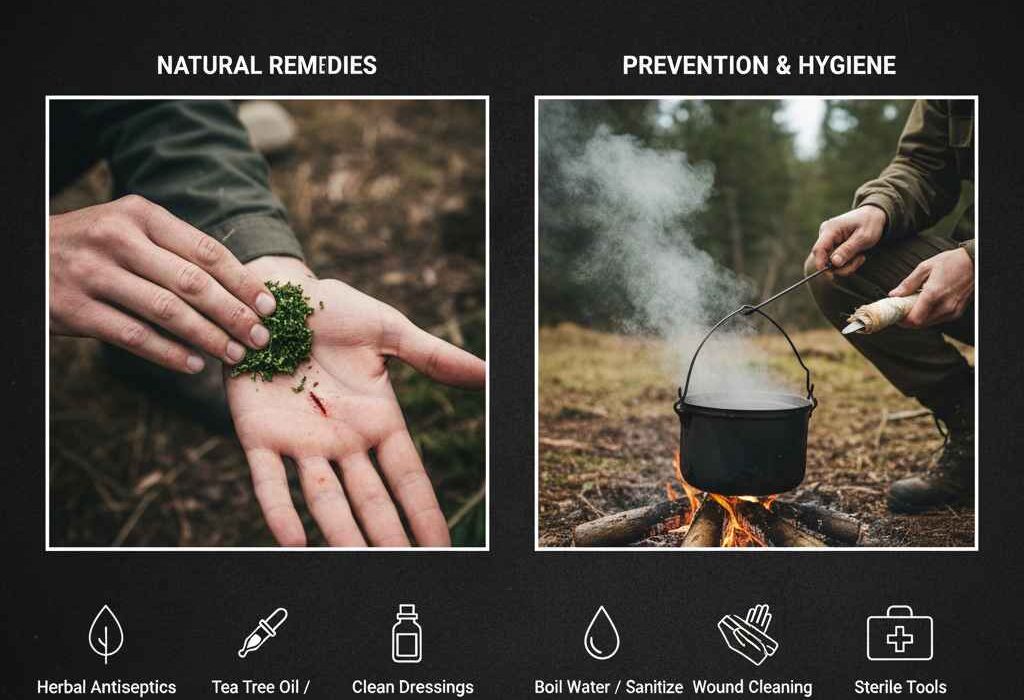
🩸 Step 1: Clean the Wound Immediately
The first and most important action is to clean the wound thoroughly:
- Flush with clean water (boiled and cooled if possible).
- Remove dirt or debris with a clean cloth or improvised tool.
- Avoid using untreated water from rivers or lakes—it may worsen the infection.
Tip: If you have alcohol, iodine, or even salt water, use it to disinfect. It may sting, but it kills bacteria.
🌿 Step 2: Use Natural Antimicrobials
Many plants and substances in nature have antibacterial properties:
- Honey – Raw honey prevents bacterial growth and helps wounds heal faster.
- Garlic – Crushed garlic has natural antibiotic compounds (allicin) that fight infection.
- Onion & Ginger – Can be applied as poultices to reduce swelling and fight microbes.
- Pine Sap – Sticky resin from pine trees acts as a natural antiseptic.
- Aloe Vera – Soothes burns and cuts while reducing bacterial spread.
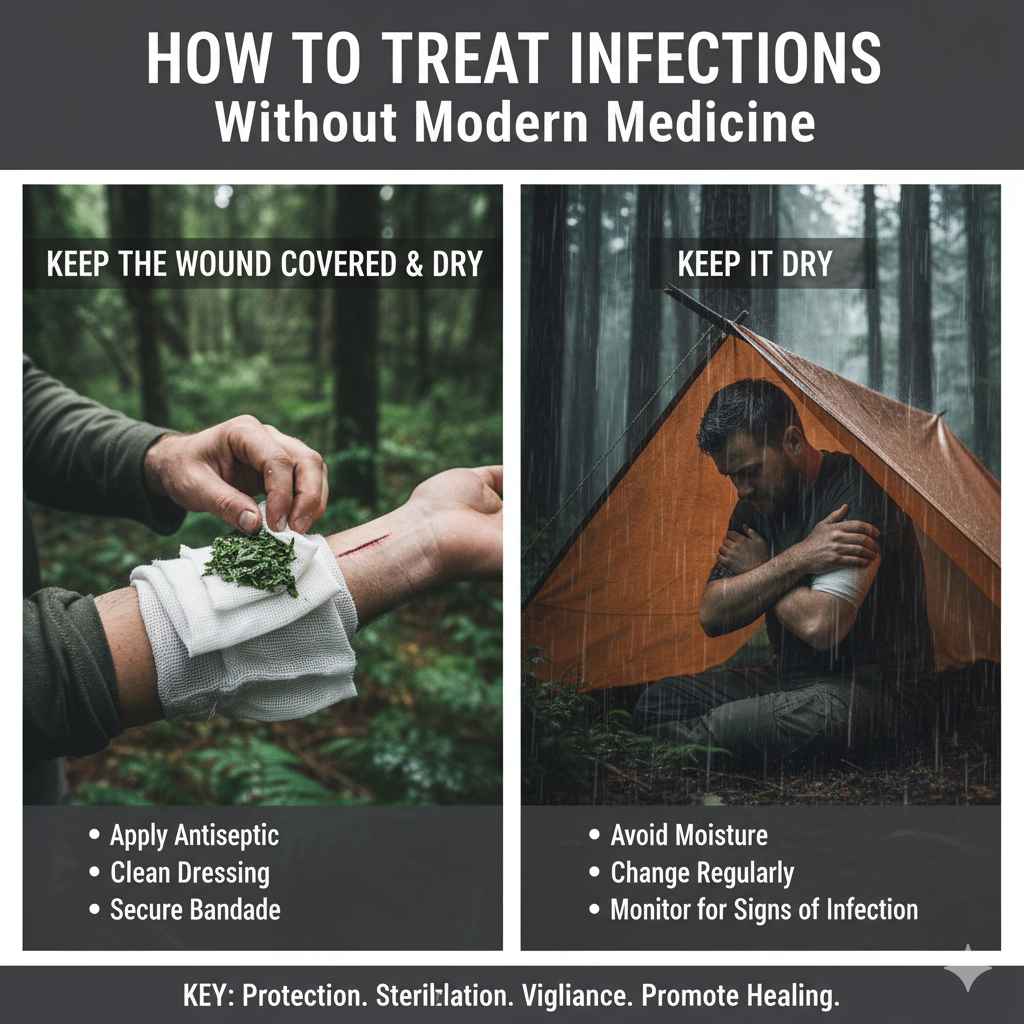
🛡️ Step 3: Keep the Wound Covered & Dry
A wound left open in dirty or humid environments is a perfect breeding ground for bacteria.
- Use clean cloth, bandanas, or even large leaves as bandages.
- Change the dressing daily.
- Keep it dry, but allow occasional air exposure to speed healing.
☕ Step 4: Boost the Body’s Defenses
Your immune system is your best weapon. Support it with:
- Hydration – Drink boiled water regularly to flush toxins.
- Nutrition – If available, eat vitamin-rich plants (like berries, greens, or pine needles for Vitamin C).
- Rest – Avoid unnecessary exertion so your body can focus on healing.
⚠️ Step 5: Know the Danger Signs
Sometimes, even the best natural remedies can’t stop a severe infection. Watch for:
- Red streaks spreading from the wound
- High fever and chills
- Swelling, pus, or foul odor
- Weakness or confusion
These are signs of blood poisoning (sepsis). If possible, seek professional medical help immediately.
🔑 Final Thought
Infections can turn a minor scrape into a life-threatening problem in the wild. By cleaning wounds, using natural antimicrobials, and supporting your immune system, you greatly increase your chances of recovery. Remember: prevention is always easier than cure.
👉 In survival, knowledge is medicine.