

When disaster strikes—whether it’s a hurricane, earthquake, cyberattack, or civil unrest—most people assume help will arrive immediately. The hard truth? It usually doesn’t.
Emergency response systems are often overwhelmed, infrastructure breaks down, and rescue teams can take days to reach those in need. That’s where the 72-Hour Rule comes in: every individual and family should be prepared to survive on their own for at least the first three days after a crisis.
This critical window can mean the difference between resilience and vulnerability. Let’s break down exactly what you need to know.
Why 72 Hours?
Disaster experts, including FEMA and the Red Cross, estimate that it takes an average of 72 hours for organized relief to arrive. Roads may be blocked, communication lines disrupted, and resources stretched thin.
In those first three days, survival depends on what you already have on hand—not what you hope to find.
Step 1: Secure the Basics of Survival
Your immediate priority should be to cover the “Rule of Threes”:
- Three minutes without air: Be aware of threats like smoke, toxic fumes, or dust. Carry a dust mask or respirator in your go-bag.
- Three hours without shelter: Exposure kills faster than hunger. Have an emergency blanket, tarp, or bivy sack.
- Three days without water: Store at least one gallon per person per day. Portable filters or purification tablets are essential backups.
- Three weeks without food: While you can go longer without eating, a small stockpile of calorie-dense, non-perishable foods keeps you fueled and sharp.
Step 2: Build a 72-Hour Go-Bag
A well-packed go-bag ensures you can move quickly if evacuation is necessary. Essentials include:
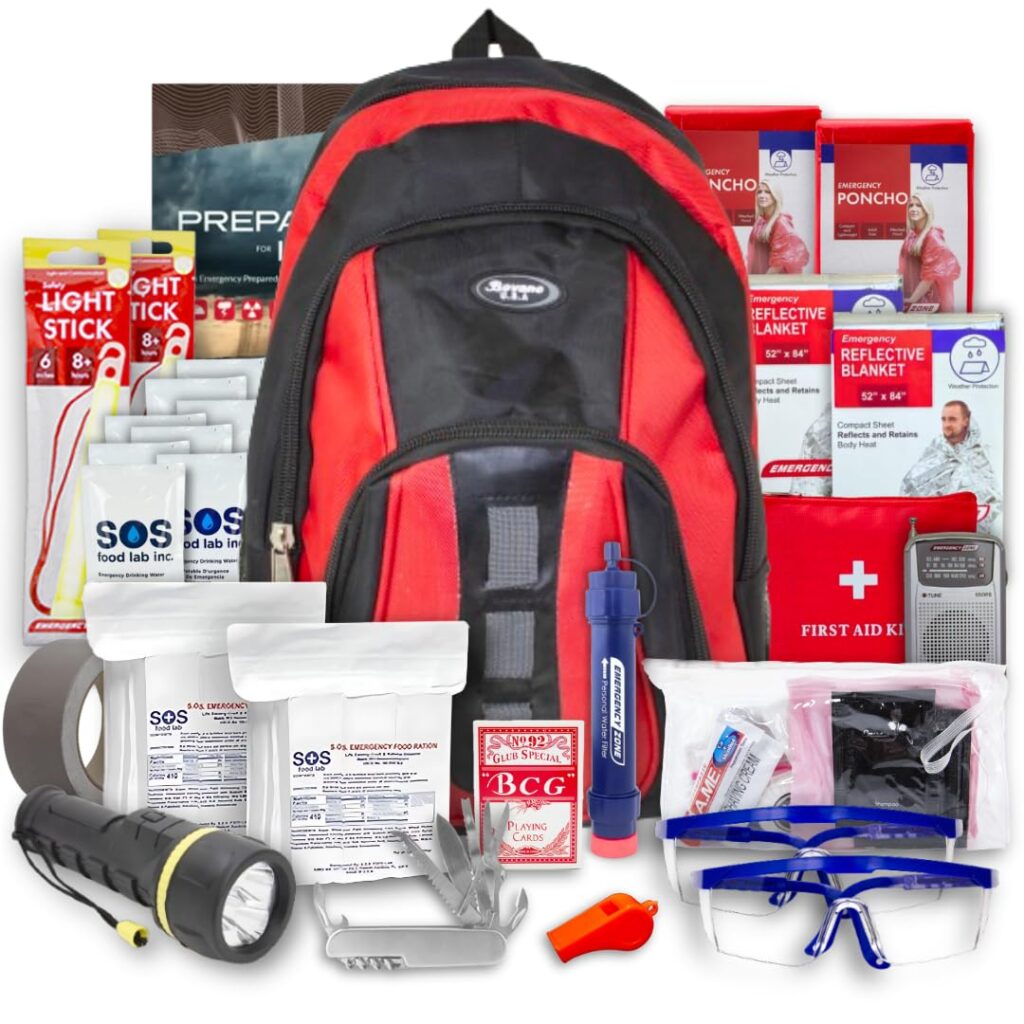
- Water supply & purification tools (bottles, tablets, or filter straws)
- Compact, non-perishable food (energy bars, freeze-dried meals, nut packs)
- First-aid kit with medications, bandages, and antiseptics
- Multitool and fire starter for shelter-building and warmth
- Flashlight with spare batteries (or hand-crank version)
- Communication tools (battery-powered radio, whistle, phone power bank)
- Emergency shelter (tarp, poncho, or space blanket)
- Extra clothing suited for your climate
- Personal documents in waterproof storage
Step 3: Have a Plan, Not Just Gear
Gear won’t save you if you don’t know how to use it. Take time to:
- Practice evacuation routes with your family.
- Agree on meeting points if communication goes down.
- Learn basic first aid and fire-building skills.
- Know local hazards—earthquakes require different prep than hurricanes.
Preparedness is about action as much as supplies.
Step 4: Protect Your Mindset
Survival isn’t just physical—it’s mental. Panic, fear, and indecision can be as dangerous as any disaster. The most prepared survivors share two traits:
- Calm problem-solving under stress.
- Flexibility to adapt when plans change.
Even the best-prepared go-bag can be lost, stolen, or destroyed. What you carry in your head—skills, training, and resilience—will always be your strongest survival tool.
Step 5: Think Beyond 72 Hours
The 72-Hour Rule is just the baseline. Once you can survive three days, extend your preparation to:
- One week (extra water, bulk food storage).
- One month (backup power sources, advanced medical supplies).
- Three months or more (gardening, hunting, foraging, and long-term storage).
This step-by-step approach keeps preparedness achievable instead of overwhelming.
Final Takeaway
Disasters don’t wait for convenience, and when they hit, help might be days away. The 72-Hour Rule is your survival foundation: food, water, shelter, safety, and a plan.
The good news? Getting started doesn’t take much. With a simple go-bag, a practiced plan, and the right mindset, you’ll be ready for whatever comes your way.
Because in a crisis, the first 72 hours are yours to own—or endure.