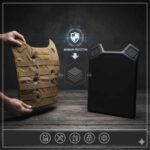
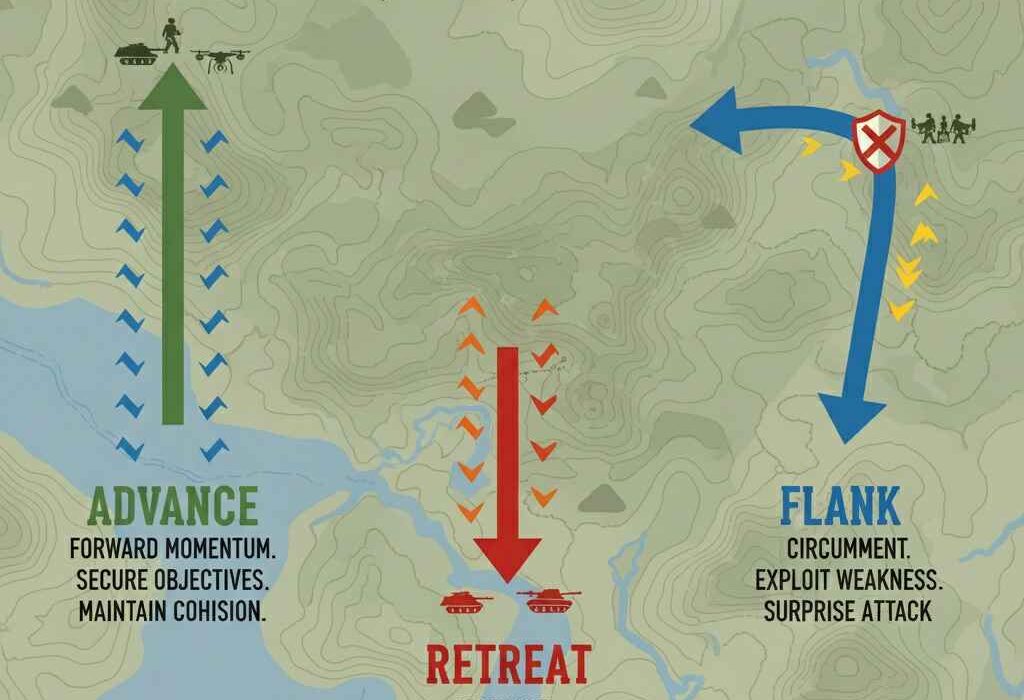
Movement wins or loses engagements before a shot is fired. Whether you’re defending a family, moving with a team, or practicing urban awareness, purposeful movement — advancing, retreating, and flanking — keeps you safer, faster, and more effective. This guide breaks down the principles, step-by-step logic, formations, and drills so your movements become intentional, not accidental.
Why Movement Matters
Too many people treat movement as an afterthought. In tactical scenarios, movement is information: it creates angles, denies the enemy options, and buys time. Good movement conserves energy, reduces exposure, and sets the conditions for success — whether that means escaping a threat, reaching cover, or repositioning for advantage.
Core Principles (Before You Move)
- Plan with Purpose: Every move should have a reason — cover, angle, extraction, or information.
- Preserve Distance & Angles: Control the distance to the threat and avoid predictable, straight-line movement.
- Use Cover & Concealment: Move from cover to cover; concealment alone is not a substitute for hard cover.
- Keep Low & Compact: Reduce your silhouette and expose as little as possible while moving.
- Communicate: Silent or verbal—confirm movement timing and roles with your team.
- Move with Intention, Not Speed Alone: Fast is useless if you run into worse exposure.
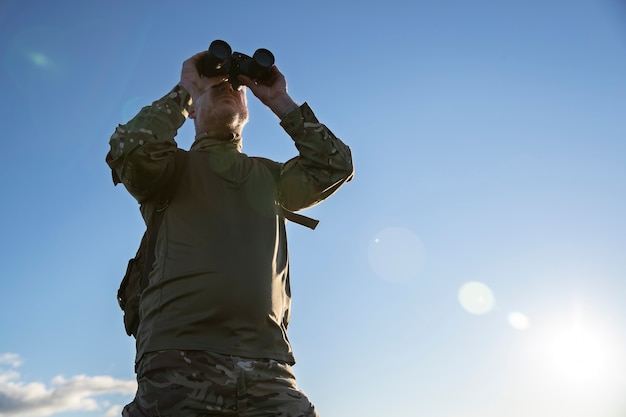
How to Advance (Move Toward an Objective)
Goal: Close distance safely while avoiding unnecessary exposure.
- Assess First: Know where you’re going and identify intermediate cover.
- Break It Into Steps: Move in short, measured intervals from one piece of cover/concealment to the next.
- Check & Move: Before each sprint, scan the destination and the route for hazards.
- Use Angles: Don’t move directly toward a known threat; approach from an oblique angle to reduce target profile.
- Buddy System: If with a partner, coordinate so one moves while the other covers — staggered movement keeps continuous observation.
- Finish Securely: Once you reach the new position, establish a defensive posture and assess next steps.
How to Retreat (Move Away While Preserving Safety)
Goal: Increase distance, get to cover, or disengage without creating new vulnerabilities.
- Control, Don’t Panic: A controlled, deliberate retreat is safer than a chaotic run.
- Rear-Guard Concept: If in a team, designate a rear-guard to watch the withdrawal and create time.
- Move in Bounds: Use the same stepwise movement as advancing — cover to cover, not in one long sprint.
- Create Obstacles: If possible, put barriers (cars, doors, furniture) between you and the threat.
- Avoid Backward Running: If you must face the threat, retreat while side-stepping or pivoting; turn your shoulders to reduce target area.
- Plan Exfil Routes: Know multiple escape routes; the first one may be blocked.
Flanking: Creating Angles and Forcing Decisions
Goal: Move to a lateral position that gives you an advantage (visibility, cover, or an unguarded approach).
- Timing Is Everything: Flanking works best when the opponent is engaged or focused elsewhere.
- Stealth & Speed: Approach from a concealed route; commit quickly once the opportunity exists.
- Coordinate With the Main Effort: The flank should be synchronized so the opponent faces pressure from multiple axes.
- Use Terrain: Trees, walls, vehicles, and buildings are natural concealment to mask lateral movement.
- Be Ready to Pivot: If the opponent detects the flank early, be prepared to disengage or convert to another axis of attack/escape.
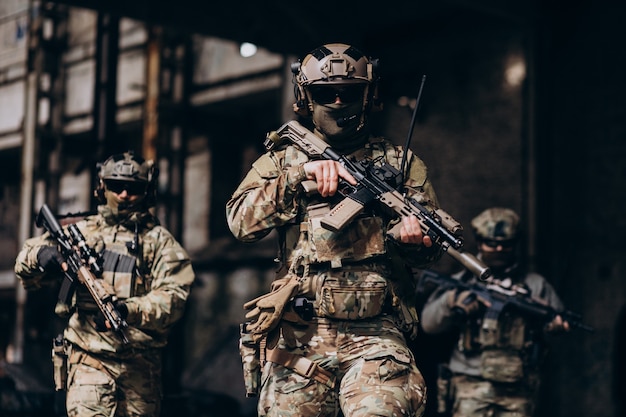
Formations & Roles (Small-Team Basics)
- File / Single-File: Good for narrow lanes. Pros: less visible profile. Cons: limited fields of fire.
- Staggered / Buddy Team: Two-up system — one point, one support. Keeps continuous coverage while moving.
- Wedge / V: Good for open areas to provide 360-degree awareness.
- Bounding Overwatch (Leapfrogging): Element A moves while Element B covers; they alternate. Ideal for advancing under threat.
Assign roles: point (leads), rear-guard, cover element, and navigator. Clarity prevents mistakes.
Communication: Silent & Simple
- Pre-plan Signals: Hand signals, taps, or short voice commands should be rehearsed.
- Confirm Actions: A short acknowledgement (verbal or tactile) before major moves avoids missteps.
- Keep It Short: Use single-word commands or two-word phrases. In noisy environments, rely on signals.
Drills to Build Muscle Memory
- Bounding Drill: Practice leapfrogging between two-person teams across a field or urban block.
- Angle Drill: Move from point A to B using predetermined angles and cover — emphasize scanning before each sprint.
- Flank Timing Drill: Simulate an engagement where one team holds attention while another practices lateral movement.
- Retreat Drill: Practice controlled withdrawals with a rear-guard, increasing speed while maintaining control.
- Low-Visibility Drill: Repeat movement drills with low light or concealment to reinforce tactile and verbal cues.
Train slowly until the pattern feels natural, then add speed and stressors (weights, noise, time limits).
Common Mistakes & How to Avoid Them
- Moving Without Purpose: Random movement creates exposure; always have an objective.
- Tunnel Vision: Focusing only on the next step and not scanning for new threats.
- No Coordination: Solo moves by team members create gaps—sync your timing.
- Overreliance on Concealment: Concealment can be penetrated; pair it with cover where possible.
- Ignoring Exit Options: Always have a fallback; don’t trap yourself into a single route.
Gear & Environment Considerations
- Footwear & Load: Mobility matters—train with the boots and kit you’ll actually carry.
- Light Discipline: Use low-profile, directional lights; avoid bright bursts that give your location away.
- Noise Management: Secure loose gear and practice quiet movement techniques.
- Urban vs. Rural: Buildings offer vertical options (windows, rooftops); open terrain requires more lateral movement and camouflage.
Final Thoughts — Move like You Mean It
Tactical movement is a mindset as much as it’s technique. Advance with purpose, retreat with control, and flank with timing. Drill these patterns until the responses are automatic. In the end, the team that moves smarter under stress controls the tempo and the outcome.
Stay deliberate. Move with reason. Get home safe.