A roaring fire can be a lifesaver in the wilderness. It provides warmth, purifies water, deters predators, and can even be used to signal for help. But what happens if you find yourself without matches, a lighter, or any modern ignition source? Learning how to build a fire in any weather without conventional tools is an essential skill for survival enthusiasts, hikers, and preppers alike.
Understanding Fire Basics
Before attempting any fire-starting method, it’s crucial to understand the three elements that a fire needs to thrive:
- Fuel: Wood, twigs, dry leaves, or any combustible material.
- Heat: A spark or friction-generated heat to ignite the fuel.
- Oxygen: Proper airflow to allow the fire to burn.
Mastering fire in adverse conditions comes down to preparing your materials and choosing the right ignition method.
Using a Ferrocerium Rod (Ferro Rod)
A ferrocerium rod is one of the most reliable survival tools. When scraped with a metal striker, it produces sparks that can ignite tinder even in wet or windy conditions.
- Step 1: Collect dry tinder, such as birch bark, dry grass, or cotton balls.
- Step 2: Position your tinder in a small bundle.
- Step 3: Scrape the ferro rod toward the tinder to create sparks.
- Step 4: Once the tinder ignites, gradually add kindling, then larger logs.
Ferro rods are waterproof, long-lasting, and work in almost any weather, making them a must-have in any survival kit.
Fire by Friction
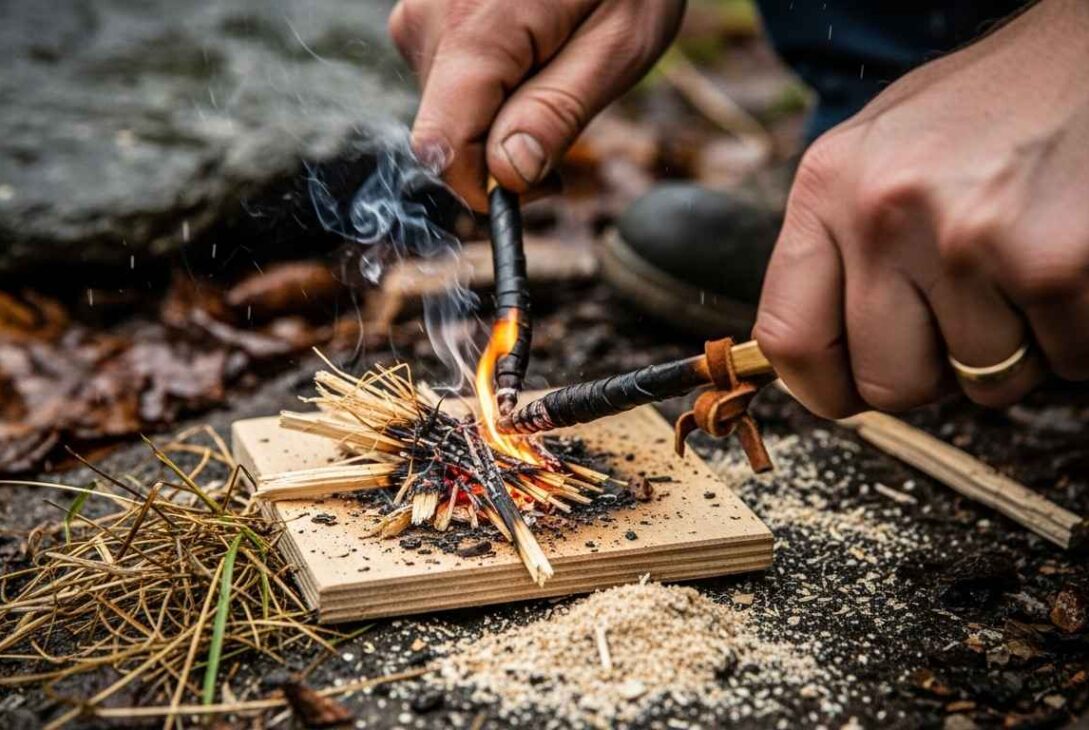
Friction-based fire-making is an ancient technique used for thousands of years. Two common methods are:
- Hand Drill: A spindle is spun between your hands on a fireboard until heat ignites the wood dust into an ember.
- Bow Drill: Uses a bow to spin the spindle, creating more consistent friction and heat than a hand drill.
Tips for success:
- Use dry, softwoods like cedar, willow, or cottonwood.
- Prepare a tinder nest to catch the ember.
- Patience and practice are key—friction fires take time and skill.
Using Flint and Steel
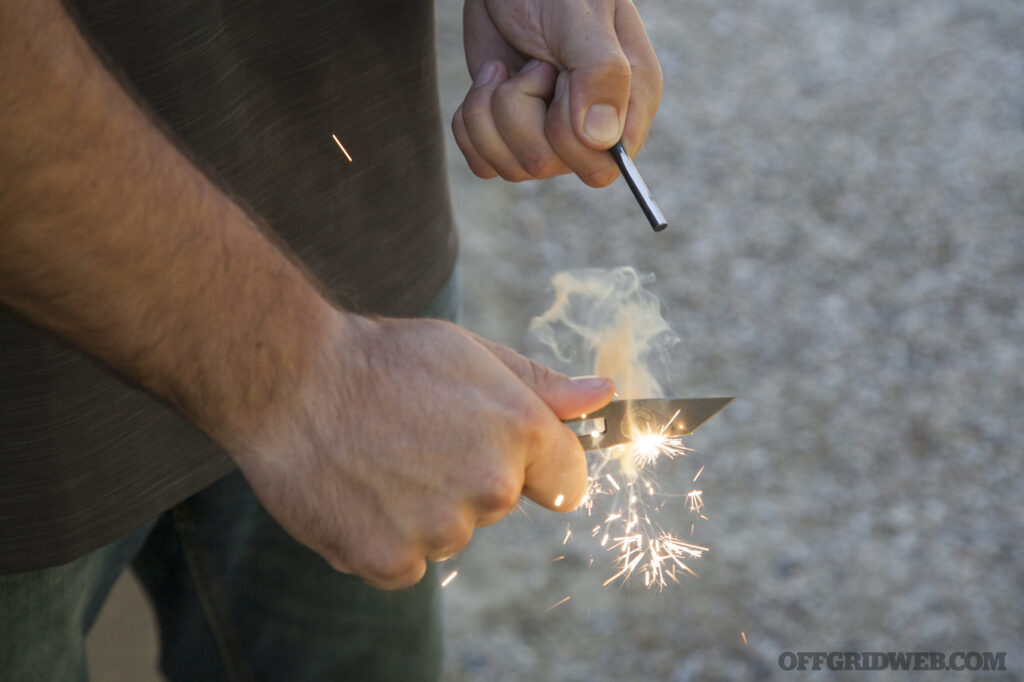
Flint and steel is another traditional method. Striking steel against a sharp flint stone produces sparks that can ignite char cloth, dry leaves, or grass.
- Step 1: Make a small tinder bundle of easily ignitable material.
- Step 2: Strike the steel against the flint, directing sparks onto the tinder.
- Step 3: Gently blow on the smoldering tinder to create flame.
Flint and steel works even in windy conditions if you shield your tinder and control airflow.
Solar Ignition
If you have sunlight and a reflective surface, you can start a fire using solar power.
- Magnifying Glass: Focus sunlight into a small point on your tinder until it ignites.
- Reflective Surfaces: Use a shiny metal lid, polished lens, or mirror to concentrate sunlight.
Solar ignition is quiet and doesn’t require physical sparks, but it only works in bright daylight conditions.
Preparing for Adverse Weather
Starting a fire in rain, snow, or damp environments requires planning:
- Dry Tinder: Keep a small amount of dry tinder in a waterproof container. Cotton balls, dryer lint, or char cloth are excellent options.
- Shelter Your Fire: Build a small windbreak using rocks, logs, or a tarp.
- Use Kindling Strategically: Start with smaller, dry twigs before adding larger logs.
]Safety First
No matter the method, fire safety is critical:
- Always clear the area around your fire of leaves, branches, and flammable debris.
- Keep water or dirt nearby to extinguish the fire if necessary.
- Never leave a fire unattended.
Conclusion
Mastering fire-making without matches or lighters is an invaluable survival skill. From modern tools like ferro rods to ancient techniques like friction fires, there are multiple ways to ensure warmth and safety in any environment.
Practice these methods regularly so that when the moment comes—whether in the wilderness or during an emergency—you can confidently start a fire under any condition. Remember, preparation, patience, and persistence are the keys to building fire without relying on modern conveniences.