When modern gear isn’t available, a little creativity turns common items into reliable fishing solutions. Fish are calorie-dense, often abundant, and surprisingly easy to catch if you use the right tools and placement. This post covers simple, improvised hooks, lines, nets, and traps you can assemble from natural materials or small kit items — plus bait, placement, safety, and ethics so you stay legal and sustainable.
The mindset: quick, quiet, sustainable
Improvised fishing is about three things: simplicity, stealth, and respect. Use the least-damaging method that works—take only what you need, avoid breeding panic in the local aquatic life, and always follow local fishing rules when they apply. In survival, every small catch matters; waste nothing.
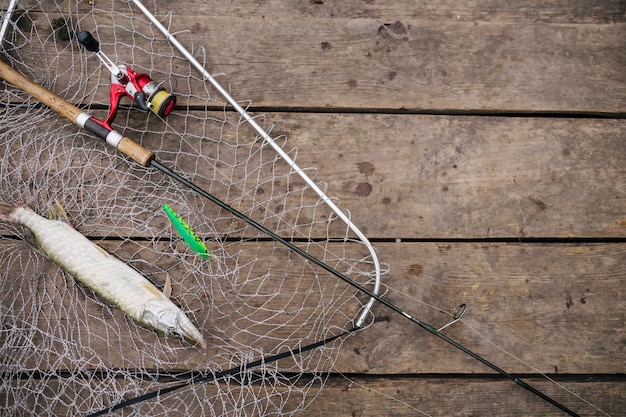
Basic materials that earn their place in a pack
If you prep for this, stash a tiny fishing kit. If not, you can improvise from nature or everyday items.
Useful items to carry or scavenge:
- Thin wire, paperclip, or safety pin (hooks).
- Paracord, strong twine, or inner paracord strands (line).
- Small cloth or mesh (net body).
- Small nails, bone fragments, or thorns (hooks or barbs).
- A blunt tool or stone (to sharpen or bend hooks).
- Containers for bait (leaf cups, plastic bottles).
Natural options: plant fibers for cordage, flexible green willow/spruce roots for lashings, bone or shell for hard hook points.
Improv Hook & Line Methods (fastest results)
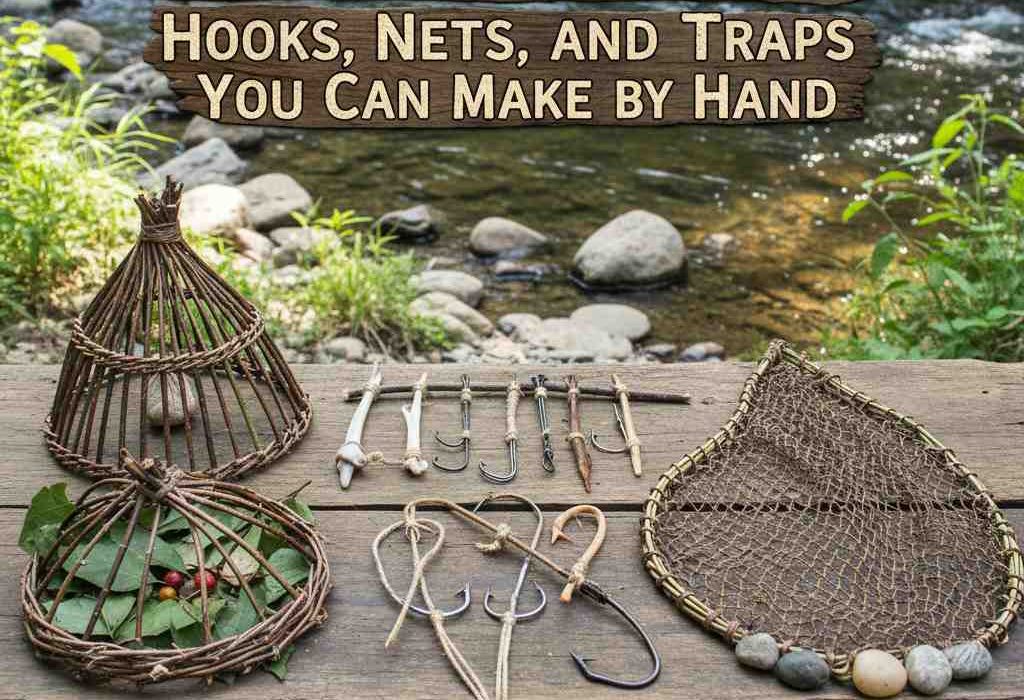
- Wire hook (paperclip/safety pin): straighten and reform into a hook shape; create a small barb by twisting the tip back slightly. Tie to a cord using a secure knot or wrap with fine inner strands. Works great for small fish.
- Bone/shell/wooden hook: carve a small J-shaped notch from a bone splinter or shell edge; sharpen and add a barb. Tie or lash to line.
- Natural-line fishing: use inner strands of paracord, plant fiber cordage, or thin root fibers. Keep lengths short (2–5 m) if wading; longer lines risk tangles.
- Float & weight: use small sticks, cork, or seed pods as floats; pebbles or clay as sinkers. Floating lines make bites easier to spot.
Tip: Small hooks and light line often outperform large rigs when fish are pressured or the water is clear.
Simple nets & scoops (catch multiple small fish)
- Hand-held scoop/net: fashion a frame from a flexible branch (oval or circular), attach torn cloth, netting, or woven plant fibers. Sweep shallow water near banks where minnows concentrate.
- Bottle trap net: cut the top off a plastic bottle, invert it to form a funnel, secure with cord—bait inside attracts small fish that swim in and can’t find their way out. Several placed along shallow margins work well.
- Cast net (rudimentary): weave a circular net from twine with weights (stones) tied around the perimeter—requires skill but catches well in calm, shallow water.
Safety note: cast nets are physically demanding and need practice; don’t use in deep or fast water without training.
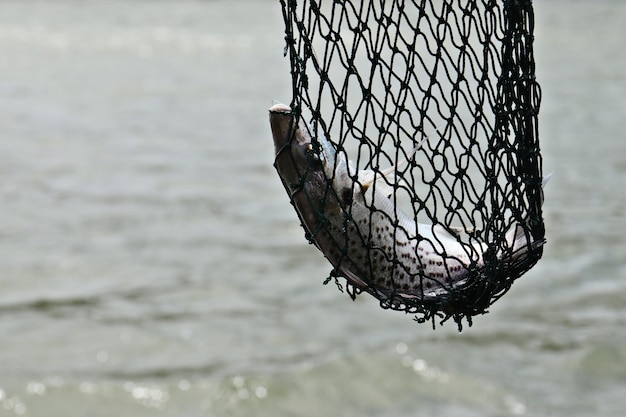
Traps that work while you sleep
- Trotline: run a main line across a small stream with short drop lines and dangling hooks (improvised as above). Anchor the ends; check regularly. Great for passive catches.
- Fish basket / funnel trap: weave a conical basket from flexible branches, with a funnel entrance that allows fish in but not out. Place in slow current or on the bottom where fish travel.
- Weir or stone funnel: arrange stones in a V-shape pointing downstream to guide fish into a shallow pool or narrow pocket where you can scoop or trap them at low tide or with a hand net.
Ethical note: check trapped fish frequently; leaving them to suffer is cruel and wastes food.
Bait & placement — what actually gets bites
- Natural bait: worms, insect larvae, small crustaceans, or pieces of other fish. Turn over rocks and logs in shallow water to find bait.
- Plant baits: certain seeds, corn, or bread (if available) can work for omnivorous species.
- Placement: fish near structure—fallen logs, undercut banks, weed edges, inflow points, or drop-offs. Early morning and dusk are often best. In moving water, fish just above riffles or behind eddies.
If you don’t have bait, a naked hook near likely ambush points will still catch opportunistic species.
Handling, safety & food prep
- Bleed and gut quickly—this improves meat quality and reduces spoilage.
- Cook thoroughly—pan-fry, roast, or boil fish; raw survival consumption has higher risk.
- Preservation: smoke or dry fish if you plan to store protein; keep them out of direct sun and away from scavengers.
- Hygiene: clean your hands after handling bait and raw fish; open wounds plus fish bacteria are a bad combo.
Wild-caught fish can carry parasites—cooking eliminates most risks.
Legal, environmental & ethical reminders
- Respect local laws and closed seasons—even in many survival situations, legal consequences matter once you re-enter civil life.
- Don’t overfish a small water source—sustainable take ensures long-term food availability.
- Avoid destructive methods that destroy habitat (electrofishing, poisons). Those are illegal, unethical, and often ruin the resource for everyone.
Quick field checklist
- Small hooks or wire pieces ✔
- Short lengths of strong line / inner paracord ✔
- Small container for bait ✔
- Lightweight tarp or cloth for cleaning & cooking ✔
- Knife or sharpeners for making/repairing hooks ✔
Final thought
Improvised fishing turns a creek, pond, or tidal pool into a dependable calorie source when everything else is scarce. Start simple: a few wire hooks, a length of cord, and a bit of patience will outperform complicated rigs. Practice these methods in safe environments so, when you really need them, you can act confidently and humanely. Fish smart, fish legal, and waste nothing — that’s how you make the most of nature’s pantry in survival situations.