
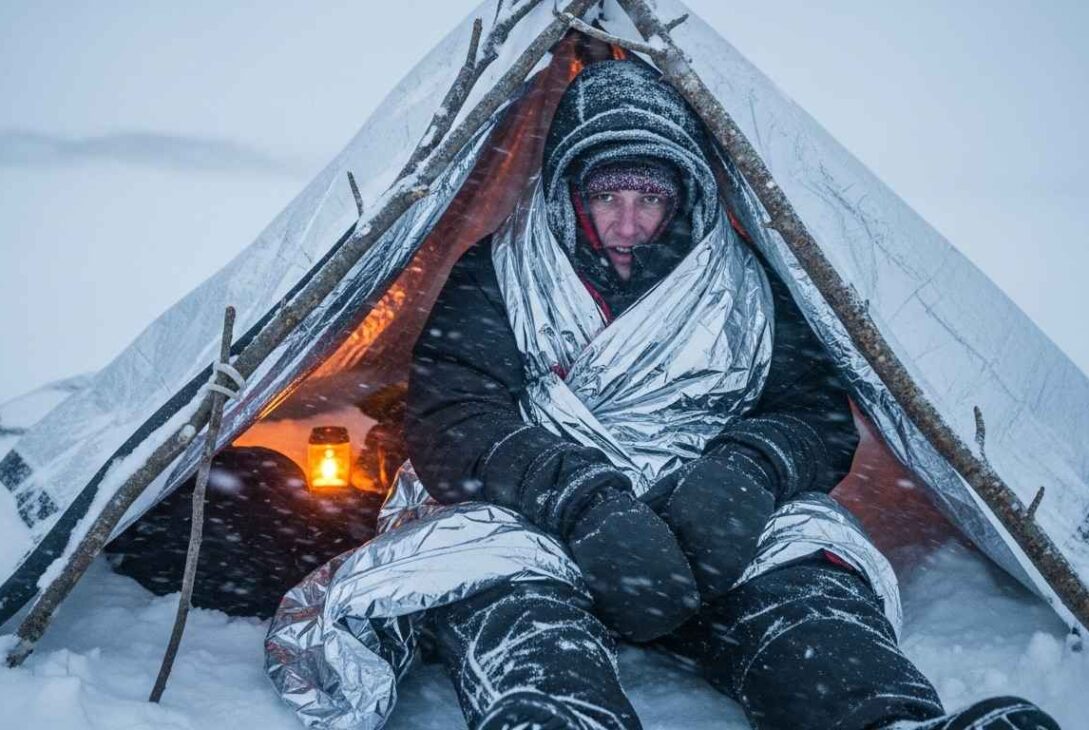
Imagine this: the sun dips below the horizon, the air sharpens, and the temperature begins to plummet. You’re miles from shelter — maybe stranded on a back road, lost on a winter hike, or facing a power outage in a snowstorm. The cold bites harder with every passing minute.
Would you know how to survive the night?
Freezing temperatures aren’t just uncomfortable — they can be deadly. But with calm thinking, quick action, and the right know-how, you can make it through until dawn.
1. Stay Calm and Assess Your Situation
Panic wastes precious energy and clouds judgment. Take a moment to slow your breathing and evaluate your surroundings:

- Do you have any form of shelter nearby?
- Are you wet, injured, or low on energy?
- How much daylight or visibility remains?
Your first decisions are often the difference between survival and danger. Staying calm gives you clarity — and clarity leads to smart moves.
2. Find or Create Shelter Fast
The key to surviving cold is simple: conserve body heat. Exposure kills faster than hunger or thirst. If you can’t find natural shelter (like a cave, rock overhang, or thick forest), build your own:
- Snow Cave or Trench: Dig into a snowbank and insulate the walls with more snow — it actually traps warmth.
- Tree Well Shelter: If you’re in deep snow, the space beneath a large tree can provide a windbreak.
- Improvised Lean-To: Use branches, tarp, or even your backpack and clothing layers to block the wind.
Remember — wind is your biggest enemy in subzero conditions. Even a thin barrier makes a huge difference.
3. Insulate Yourself from the Ground
Cold doesn’t just come from the air — it rises from below. Sitting or lying directly on snow, ice, or frozen ground drains heat rapidly.
- Use anything dry as insulation: branches, leaves, clothing, or even your backpack.
- If you have a sleeping bag, put extra material underneath it, not just over you.
Creating a thermal barrier is crucial for preventing hypothermia while you rest or sleep.
4. Layer Up — the Smart Way
Clothing isn’t just about bulk; it’s about trapping warm air and managing moisture. Follow the three-layer system:
- Base layer: Wicks sweat (avoid cotton — it traps moisture).
- Middle layer: Insulates (fleece, wool, or down).
- Outer layer: Blocks wind and water.
If you start sweating, vent your layers. Wet clothing will chill you faster once you stop moving.
5. Keep Moving — But Don’t Overdo It
Light movement keeps your blood circulating and generates heat. Do small exercises like walking in place, squats, or arm swings.
But remember — sweating is your enemy. Once your clothes are damp, heat loss accelerates. Work just enough to stay warm, not soaked.
6. Start a Fire (If Possible)
Fire is life. It provides warmth, light, morale, and a way to melt snow for water.
If you can, find dry tinder (birch bark, pocket lint, paper) and build a small, controlled fire.
- Shield it from the wind using rocks or snow walls.
- Keep it manageable — large fires waste energy and fuel.
- Reflect heat toward you with a rock wall or aluminum blanket.
Can’t make fire? Use chemical hand warmers, candles, or even a flashlight’s heat source to generate micro-warmth.
7. Stay Hydrated and Fueled
It’s easy to forget water when you’re surrounded by snow, but dehydration sneaks up fast in the cold. Melt snow before drinking (eating snow directly drops your core temperature).
Keep your energy up with high-calorie snacks — nuts, chocolate, jerky, or energy bars. Your body burns more calories in the cold to maintain heat.
8. Recognize the Signs of Hypothermia
Early recognition saves lives. Watch for:
- Uncontrollable shivering
- Slurred speech or confusion
- Slow breathing or loss of coordination
If these signs appear, get warm immediately — through body heat, dry layers, or shelter. Once hypothermia sets in deeply, self-help becomes nearly impossible.
9. Use Every Heat Source — Even Your Own
Your body is a furnace. Share heat if you’re not alone — skin-to-skin contact (under dry layers) can stabilize both people’s temperatures.
If solo, curl into a ball to conserve heat, or use your backpack and clothing to seal warmth around your core.
10. Wait for Sunrise, Stay Alert
Nighttime is the hardest stretch. Focus on maintaining warmth, hydration, and calm until daylight returns.
When the sun rises, re-assess your situation — travel only if it’s safe, visible, and you have a clear destination.
Final Thoughts
Surviving a night in freezing temperatures isn’t just about gear — it’s about mindset and adaptability.
Stay calm. Stay dry. Keep your heat.
Every decision you make should answer one question: “Will this help me stay warm until morning?”
In survival, that simple rule can mean the difference between life and death.