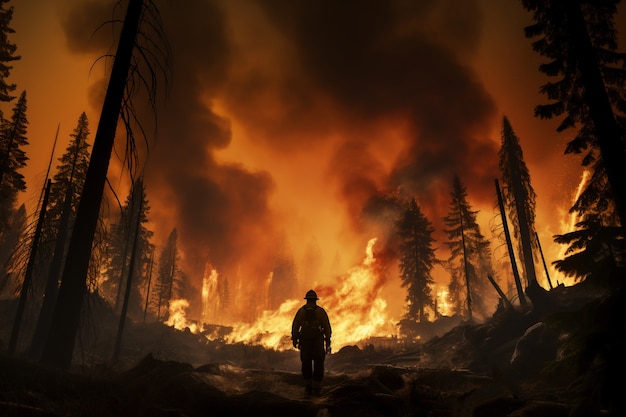
The first rule of confronting a forest fire is always Evacuate Immediately. Nothing is worth the risk of staying in the path of a rapidly moving wildfire. However, in extreme, worst-case scenarios—where a rapidly moving fire blocks all escape routes—survival shifts from evacuation to direct defense and short-term shelter.
This information is for emergency preparation only. Always heed official evacuation orders.
1. 🛑 The Decision Point: Shelter-in-Place Protocol
The decision to stay and shelter should only be made when a fire is approaching, the smoke is dangerously heavy, and escape is confirmed impossible due to blocked roads, terrain, or the speed of the flames.
A. Prioritize the Vehicle (If Applicable)
If you are in a vehicle and trapped by fire, your car offers the single best chance of short-term survival.
- Turn Off the Engine: If the fire is immediate, pull over to a safe, clear area (a clearing, a paved road, or a large, bare rock outcropping). Turn off the engine to conserve fuel and prevent vapor ignition.
- Stay Down: Close all windows and vents. Lie down on the floor beneath the dashboard or seat. This position is lower than the hot air and protects you from radiant heat, which is the most lethal element.
- Cover Up: Use a wool blanket, thick jacket, or coat to cover your exposed skin. Wool is highly fire-resistant and offers excellent insulation against radiant heat.
- Wait: The fire front may pass quickly (often in minutes). Wait inside the vehicle until the most intense heat has clearly subsided.
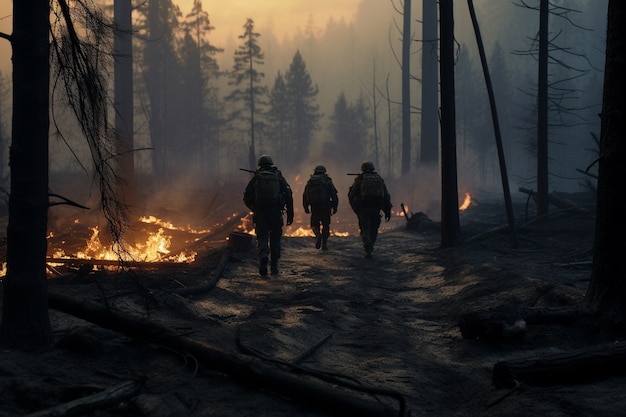
B. On Foot: The Scorch Zone (The “Safety” Clearing)
If you are on foot, your immediate goal is to find a place where there is minimal fuel for the fire.
- Look for Natural Barriers: Prioritize open spaces, such as:
- Rocky Outcroppings or Boulders: Large, bare rock absorbs heat but won’t burn.
- Lakes, Ponds, or Large Rivers: If available, fully submerging in water is the safest option.
- A Previously Burned Area (The Black): If a low-intensity fire has already passed through a section of the forest, the fuel is gone, making the blackened area safer than untouched forest.
2. 🛡️ Defense: Mitigating the Three Killers
When the fire is upon you, survival depends on mitigating the three primary threats: Radiant Heat, Smoke Inhalation, and Fire.
| The Threat | The Danger | The Survival Action |
| Radiant Heat | Causes third-degree burns from a distance; often fatal before flames touch you. | Get behind anything solid (rock, vehicle, dirt embankment). Lay low to the ground. Cover all exposed skin with non-synthetic material (wool, cotton). |
| Smoke/CO | Carbon monoxide and low oxygen levels cause confusion and loss of consciousness. | Use a wet cloth (shirt, bandanna) to cover your mouth and nose. Stay low; smoke rises. Breathe shallowly. |
| Flames | Direct contact with fire. | Create a scrape-down shelter (see below) or seek water. Do not run uphill—fire travels faster uphill. |
The Scrape-Down Shelter
If no natural shelter is available, you must create a small depression in the earth.
- Scrape: Use a tool or your hands to scrape all vegetation, needles, leaves, and organic matter down to the mineral soil in an area at least 4 feet by 8 feet.
- Dig: Dig a shallow trench or hole in the center of the scraped-down area (a “fire swale”).
- Huddle: Lie face down in the trench, using dirt to cover exposed skin if possible. Use your clothing to cover your head and face, creating a barrier against heat and smoke.
3. 🌬️ Post-Fire Survival: The Immediate Aftermath
Once the main fire front passes, the danger is not over.
- Do Not Move Immediately: Wait until the air clears somewhat and the sound of crackling fire diminishes significantly. The ground will be dangerously hot, and falling debris (snags) is a major hazard.
- Assess and Treat: Immediately check yourself for burns, especially those caused by radiant heat on the hands and face. Use any available water to cool serious burns.
- Move to Safety: Only once the immediate area is stable, begin moving cautiously toward a road, a large cleared area, or a natural water source, always watching out for embers, hot spots, and downed trees.
The knowledge to survive a forest fire is a sobering reminder that preparedness is the ultimate defense. Your best strategy is always proactive vigilance and following all official evacuation orders immediately.