
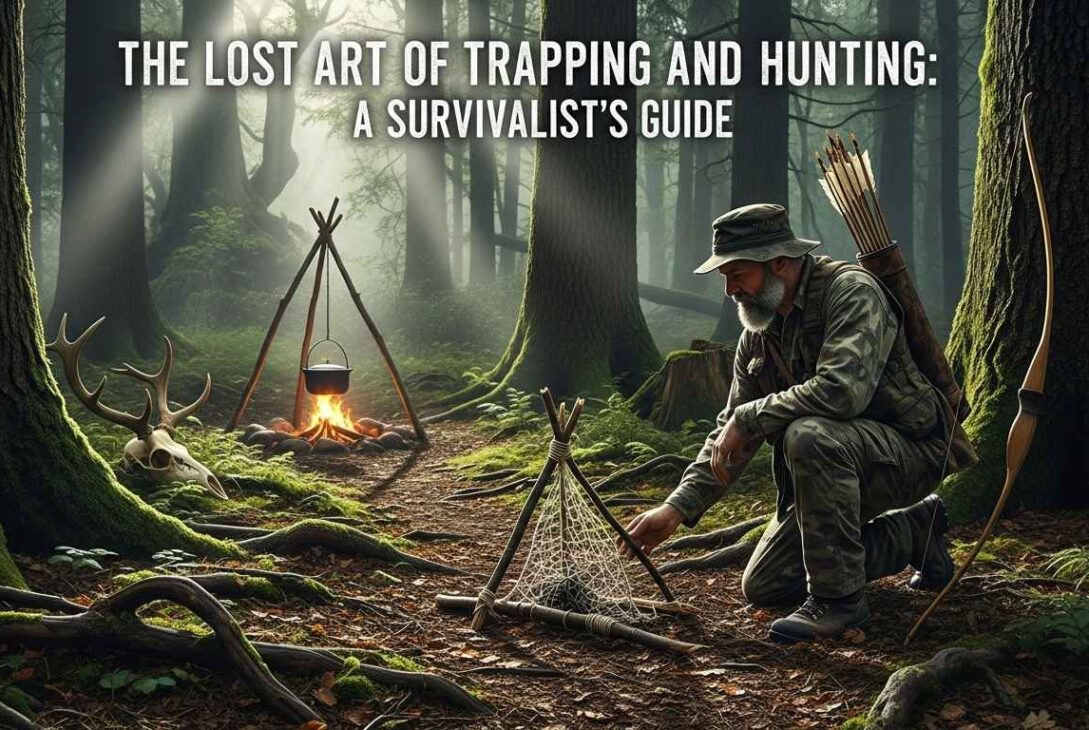
Hunting and trapping were once essential skills for human survival. They provided food, clothing, and materials long before grocery stores and modern conveniences existed. Today, while these skills may seem outdated to many, they remain invaluable for survivalists, outdoor enthusiasts, and anyone interested in self-reliance. Understanding the principles behind trapping and hunting is not just about catching food—it’s about connecting with nature, developing patience, and sharpening your survival instincts.
Why Trapping and Hunting Matter Today
Even in the modern world, knowing how to hunt and trap offers practical benefits:
- Self-sufficiency: You can secure food in emergencies when stores or supplies are unavailable.
- Survival readiness: In disaster scenarios, these skills can be the difference between hunger and sustenance.
- Environmental awareness: Hunting and trapping teach you to read animal behavior and understand ecosystems.
- Physical and mental discipline: Patience, observation, and stealth are critical, honing both mind and body.
Trapping: The Basics
Trapping involves setting devices or mechanisms to catch animals with minimal human presence. Here are some key principles:
1. Know Your Prey
Understanding the habits and habitats of your target is crucial. Small game such as rabbits, squirrels, and birds are commonly trapped because they are easier to find and catch. Observe tracks, droppings, and feeding areas to identify the best trap locations.
2. Types of Traps
- Snare traps: Simple loops of cord or wire designed to tighten around an animal’s leg or neck. Ideal for rabbits and small mammals.
- Deadfall traps: Heavy objects balanced to fall and trap animals when triggered. Useful for medium-sized game.
- Cage traps: Enclosed boxes with a trigger mechanism, allowing safe capture without harming the animal, often used for relocation or food in a survival scenario.
3. Placement and Concealment
Animals are cautious; traps must be placed along well-used paths and disguised naturally with leaves, dirt, or grass. The goal is to appear part of the environment rather than a foreign object.
4. Baiting
Select bait based on the target species. Fruits, nuts, or small bits of meat work for various animals. Remember: bait should attract without alarming the animal.
Hunting: Principles That Never Change
While trapping is passive, hunting is active and requires different skills:
1. Stealth and Movement
Approach quietly and stay downwind to avoid detection. Your body language and movements should mimic the natural surroundings to avoid startling prey.
2. Tracking
Tracking is an essential skill. Learn to read footprints, broken twigs, disturbed vegetation, and scat to predict animal behavior. The more accurately you can read signs, the higher your success rate.
3. Weapons and Tools
Traditional methods include bows, slings, or spears, but modern survivalists may use firearms or air rifles where legal. The key is to master one tool thoroughly. Accuracy, patience, and ethical practices are more important than the weapon itself.
4. Timing and Patience
Animals are more active at dawn and dusk. Planning your hunting schedule according to the species’ natural activity patterns improves chances of success. Patience is critical—long waits and stillness are part of the process.
Ethics and Legal Considerations
Even in survival scenarios, ethical and legal considerations matter:
- Follow local laws: Hunting and trapping regulations exist to preserve wildlife populations. Ensure you are aware of what’s legal in your area.
- Respect the ecosystem: Only take what you need, and avoid unnecessary harm to the environment or non-target species.
- Humane practices: If you hunt or trap, use techniques that minimize suffering. Quick, decisive methods are best.
Reviving the Lost Art
While technology dominates our lives, the principles of trapping and hunting are timeless. Practicing these skills fosters self-reliance, respect for nature, and situational awareness. Modern survivalists often combine traditional skills with contemporary gear—like compact traps, GPS mapping, or lightweight knives—creating a balanced approach to wilderness preparedness.
For beginners: start small. Learn to identify tracks, set simple snares, or practice tracking in safe, legal areas. Gradually build your knowledge and confidence, and always prioritize safety.
Final Takeaway
Trapping and hunting are more than survival skills—they are a way to reconnect with nature, sharpen mental and physical instincts, and prepare for unforeseen emergencies. By reviving these lost arts, you not only gain practical skills but also a deeper appreciation for the balance between humans and the wild.